JOLLY CLASSROOM × JSS
Jolly Classroom,
with support for your teaching.
Children say the sounds, blend them together and try to read for themselves. Bring digital resources and thoughtful teaching together to create those moments.
Request pricing & training optionsExplore a teaching sequence ↓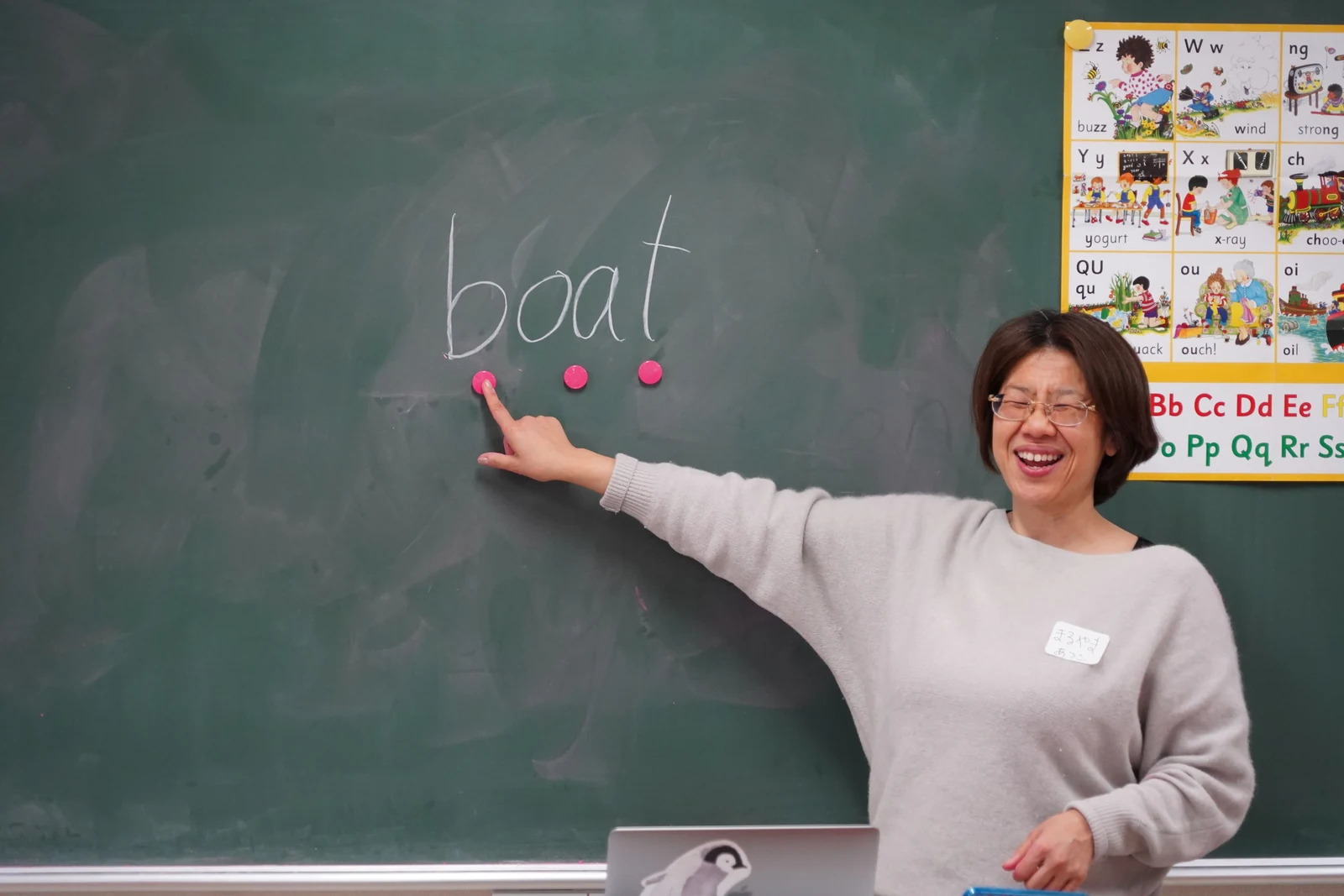
WHAT IS JOLLY CLASSROOM?
A digital teaching platform for educators.
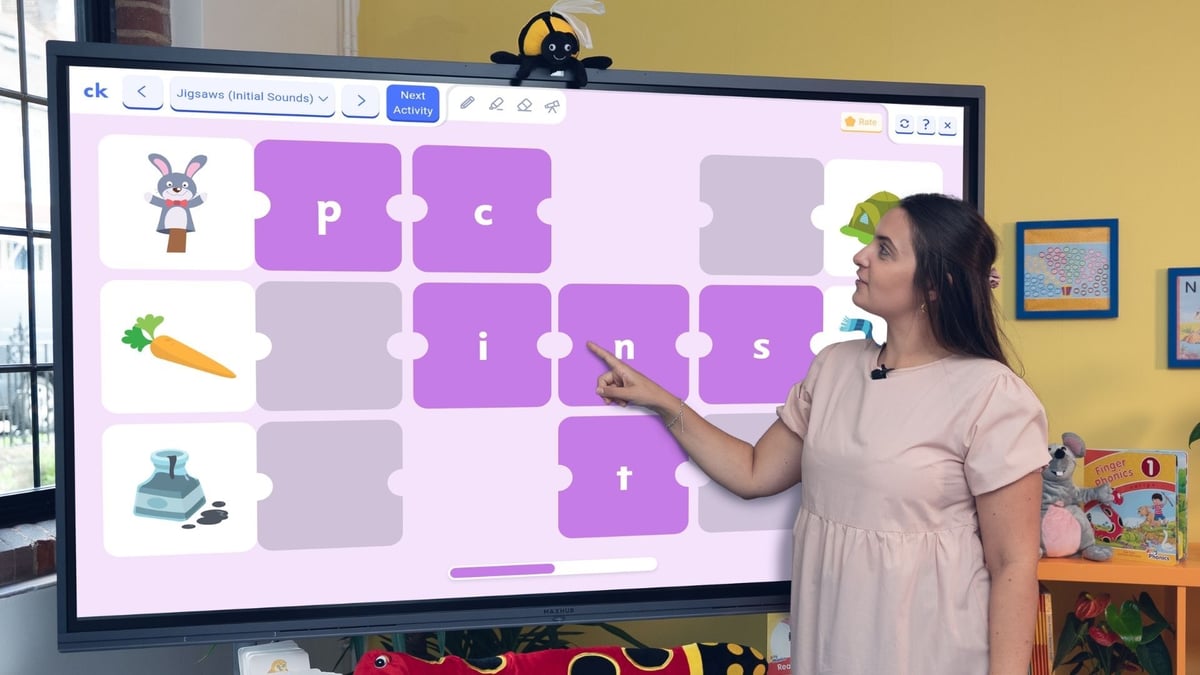
Jolly Classroom brings together Jolly Phonics and Jolly Literacy lessons, activities and guidance. Available content depends on the subscription. It is a different product from the printed Classroom Kit.
Lessons & activities
Invite children to participate in screen-supported lessons.
Teacher guidance
Prepare with guidance on the lesson content.
Books & literacy
Combine digital work with printed materials and reading.
Product information: Jolly Learning, checked 10 September 2026. We confirm licensing and Japanese pricing during your enquiry.
JOLLY CLASSROOM · WHAT’S CHANGED
Four sounds. A day to revisit them.
The updated weekly model introduces four sounds, with a dedicated fifth day for revision. It differs from the pace shown in the printed Handbook; both can be adapted to the learners and teaching context.
- Day 1New soundSound 1
- Day 2New soundSound 2
- Day 3New soundSound 3
- Day 4New soundSound 4
- Day 5RevisionRevisit learning
| Resource / model | Weekly pace | Indicative journey |
|---|---|---|
| Previous Jolly Classroom | 5 sounds per week | Approximately 9 weeks |
| Updated Jolly Classroom | 4 sounds + a fifth day for revision | 10 weeks in the update guidance |
| Handbook / Scope & Sequence | The 5-sound weekly plan is unchanged | Adapt to learners and teaching context |
The duration is the journey described in the update, not a guaranteed time to achieve learning outcomes. Check the actual lesson plan for the allocation of all 42 sounds and adapt it to lesson frequency and understanding.
Weekly Dashboard
See the week at a glance
A new dashboard shows what is being taught across the week.
Lesson Overviews
Plan and deliver each lesson
Suggested timings, animated story images, colour-coded sections, songs, printable worksheets and clearer teaching guidance.
Activity Bank
Choose the practice your learners need
Activities for Letter Sounds, Words, Tricky Words, and Phrases & Sentences, for whole-class, small-group or individual practice.
Targeted practice
Respond to individual needs
More independent and targeted practice, with new and updated activities offering greater variety.
Folktale Readers
Move from sounds into stories
Folktale Readers are available directly in Jolly Classroom, organised by colour level.
SPG 2
Continue into the next year
Spelling, Punctuation and Grammar 2 extends the learning journey into the next year of spelling, punctuation and grammar.
How could this work in your setting?
Discuss pacing alongside printed books, planning revision, using the Activity Bank for individual practice, and preparing for readers or SPG 2 with Atsuko Maruyama and JSS. Explore a plan for your timetable and learners rather than treating four sounds a week as a fixed rule.
Discuss the update & training optionsAvailable content depends on the subscription. Training and ongoing support are quoted separately by scope.
Does the printed Handbook need replacing?
The update guidance says that this change does not require revisions to the Handbook or other publications. Their five-sound weekly plan remains in place and has always allowed adaptations, including teaching fewer sounds per week.
Source: Jolly Learning, “Jolly Classroom Updates” (supplied document, reviewed 10 September 2026). The document does not report measured learning outcomes for the new features. Official product & plan information ↗
A LESSON, STEP BY STEP
See how a lesson can unfold.
An illustrative teaching sequence proposed by JSS, rather than a simulation of the software.
Choose a sound and a learning goal
Review the guidance and connect the lesson with sounds and vocabulary the children already know.
YOUR CONCERNS → A PRACTICAL PLAN
Connect the features with your classroom.
| Your concern | What the resource offers | Implementation & training with JSS |
|---|---|---|
| Planning takes too long | Keep guidance and activities together | Review lesson length, prior learning and resources, then explore a workable teaching sequence in training. |
| Too much translation in lessons | Bring sounds and activities into teaching | Practise pronunciation, blending and prompts with the difficulties of Japanese-speaking learners in mind. |
| Teachers use different approaches | Work from shared lesson content | Japanese- and English-language training helps staff share approaches to introducing sounds and revisiting learning. |
| Some learners struggle with literacy | Make space for repeated practice | Consider smaller steps, adjusted practice and different presentations. Individual support and collaboration with specialists may also be needed. |
READ THE EVIDENCE
What the evidence does—and does not—show.
These figures are the numbers of students identified as at risk in official annual reports from East Central Alberta Catholic Schools, Canada.
The report describes Jolly Classroom alongside small-group teaching and other support, and includes literacy and numeracy assessment. These are not effects attributable to the software alone, or outcomes for JSS learners in Japan.
Grade 1
Grade 2
Grade 3
Unit: students. All bars use a 0–100 scale. These counts are not converted into improvement percentages.
Read the figures as a table
| Grade | Initial | Reassessment |
|---|---|---|
| 1 | 61 | 15 |
| 2 | 82 | 12 |
| 3 | 71 | 21 |
2023–2024 AERR: printed page 10. Initial assessment counts: Grade 1, 162; Grade 2, 124; Grade 3, 157. Use the findings with their limitations when planning your own evaluation.
WHY PURCHASE THROUGH JSS?
Choose the support your school needs.
A lesson depends on who is learning, the sequence and how you present it. Through JSS, explore Japanese- and English-language training with Jolly Phonics & Jolly Literacy Official Trainer Atsuko Maruyama, informed by her daily teaching.
- Teaching informed by the sound and literacy difficulties Japanese-speaking learners may encounter.
- Consultation informed by teacher training in schools and international schools.
- Lesson planning that connects explanations, practice and checks for understanding.
OFFICIAL TRAINER + OFFICIAL DISTRIBUTOR
Resources and teaching.
Connected by experience.
Atsuko Maruyama is a Jolly Phonics & Jolly Literacy Official Trainer and runs JSS as an official distributor. Her experience connects resource information with what happens in a classroom or at home.
- 01International exchange
Publisher, authors and fellow educators
- 02Local classroom experience
Daily teaching and staff training
- 03Choose, teach and review
Connected resource and teaching advice
BEFORE YOU START
Check the practical details first.
Will it work with our equipment?
Check your internet connection, browser, screen and sound using the official trial. Confirm licensing and permitted use before purchasing.
Will children just watch a screen?
Combine speech, actions, cards and writing. Training can include planning activities away from the screen.
What about exams or dyslexia?
This is a resource for literacy foundations. It does not replace a complete examination preparation programme or guarantee learning outcomes or the resolution of difficulties.
What will the resource and support cost?
Licensing and any training or support are quoted separately. Free support or regular meetings are provided only where explicitly agreed.